
Robot Marathons: Wireless Charging's Industrial Litmus Test
A Technological Breakout Beyond the Starting Line
In the world's first humanoid robot half marathon, which has just concluded, the first robot to cross the finish line has emerged: Tiangong 1.2 Max, completing the course in 2 hours, 40 minutes and 24 seconds. A 21-kilometer route, a two-hour-and-forty-minute grind — behind Tiangong 1.2 Max's victory lies a collective challenge that the humanoid robotics industry tacitly acknowledges: battery endurance. In this inaugural humanoid robot half marathon, the contestants' "range anxiety" was even more acute than that of human runners: batteries had to be swapped mid-race, overheated joints needed emergency coolant, and the final sprint was forced to slow down as power ran critically low. Even the champion Tiangong team had to urgently deploy a backup robot after their primary machine fell at the 15-kilometer mark.

This race was more than a performance testbed — it was a bellwether for technological evolution. The problems amplified on the track are in fact the common predicament facing all mobile robots: as bipedal walking technology gradually matures, how can uninterrupted energy supply be achieved in complex scenarios? How can robots become genuinely reliable productive forces in real-world settings such as factory assembly lines and logistics warehouses?
ZoneCharge's wireless charging technology is rewriting the underlying logic of robotic energy supply through two engines: "imperceptible top-up charging" and "dynamic power supply."
From Standard Modules to Dynamic Power Supply
1. A Hidden Trick in the Soles: Imperceptible Top-Up Charging
A robot only needs to pause briefly at a supply station — no plugging or unplugging, no exposed connectors. Simply by placing both feet on the ground, charging is complete. ZoneCharge has designed a foot-mounted receiver solution for humanoid robots: by embedding the receiving module into the robot's feet and pairing it with transmitter pads installed flush into the ground (with a charging distance of about 5 cm), the charging process becomes as natural as a human "stopping to rest and grab a drink of water."
This means: on-demand recharging enables continuous operation, allowing for smaller battery capacity and reduced robot weight; the wireless, electrode-free design suits a wide range of working environments while ensuring stable energy transfer; and the high power density design minimizes the receiver's impact on motion balance.
2. Dynamic Power Supply: The "Invisible Energy Belt" of Future Racetracks
Even more exciting is ZoneCharge's "dynamic wireless power supply" technology, already validated in the logistics sector, which may completely rewrite the rules of the race — with power coils laid beneath the track, robots could charge while running, and range anxiety would become a thing of the past. Although cost constraints currently limit this solution largely to industrial scenarios, its potential is already clear enough: the robot marathons of the future may well evolve into "extreme endurance tests" that never lose power.
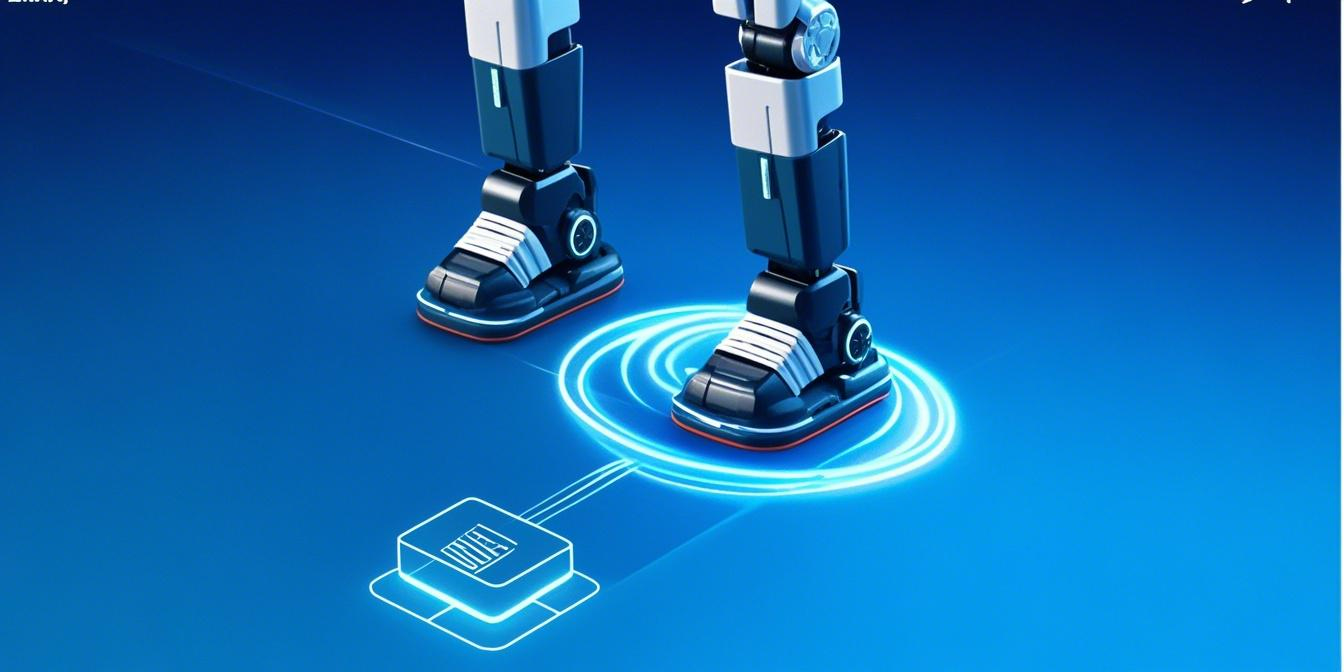
This humanoid robot marathon was never about showing off. Perhaps, as the event organizers put it, these "wipeout moments" will ultimately become nourishment for the industry's evolution. And when robots no longer need to be distracted by their power levels, engineers can focus more intently on core challenges such as gait and posture control and environmental interaction — is this not, in another sense, "slow is fast"? Only when energy supply evolves from an "interruptive event" into a "continuous service" can robots truly become partners to humans. As computer scientist Mark Weiser once said: "The most profound technologies are those that disappear. They weave themselves into the fabric of everyday life until they are indistinguishable from it." ZoneCharge's wireless charging solution is quietly evolving in exactly this direction.

From Boston Dynamics' backflips to the robot dance on the Spring Festival Gala stage, every stunning appearance of humanoid robots is backed by an extreme challenge in energy efficiency. ZoneCharge's wireless charging solution seeks to turn that challenge into the norm: when charging becomes imperceptible, dynamic, and ubiquitous, robots may finally fulfill humanity's original fantasy of a "perpetual motion machine."
At this moment, we prefer to see this marathon as a metaphor: the racetrack of technological breakthroughs has no finish line, and what wireless charging provides is a pair of "invisible running shoes" that let the industry run farther and more freely.