
Zhonghui Chuangzhi wireless charging technology helps clean robots for photovoltaic power plants: efficient、flexible、 and safe
Against the backdrop of global energy structure transformation, the photovoltaic industry has become one of the most promising new energy industries due to its clean and renewable characteristics. However, with the rapid development of photovoltaic power plants and the large-scale deployment of photovoltaic modules, the issue of cleanliness of photovoltaic panels has gradually become prominent and has become one of the challenges restricting the sustainable development of the photovoltaic industry.
Therefore, photovoltaic cleaning robots, as a new type of cleaning tool, have gradually attracted attention from the industry. Photovoltaic cleaning robots can automatically sense the degree of dirt on the surface of photovoltaic panels and perform precise cleaning operations as needed. However, due to the fact that photovoltaic power plants are usually located in remote areas and have large areas, photovoltaic robots face the challenge of long-range charging when performing cleaning operations. At the same time, the work efficiency and cleaning effect of photovoltaic robots are closely related to their endurance.
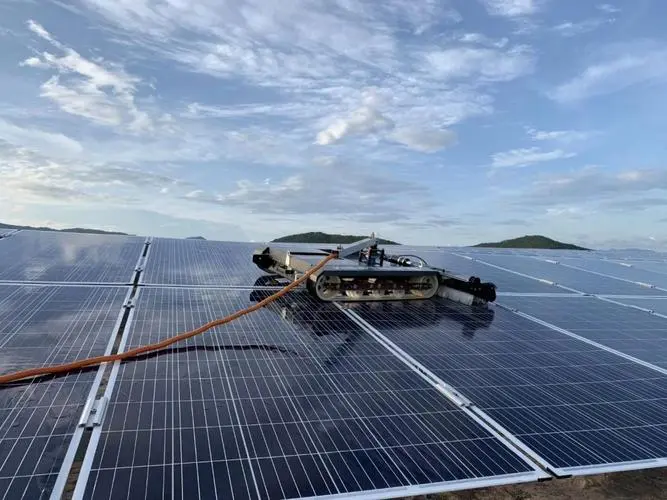
The current situation of battery life and charging issues for photovoltaic robots:
1. Short battery life: Traditional photovoltaic robots usually use wired charging methods, which require manual battery replacement or cable connection for charging. This method is not only time-consuming and labor-intensive, but also limits the working time and cleaning efficiency of photovoltaic robots.
2. Incomplete charging facilities: In some photovoltaic power plants, the charging facilities may not be complete enough, resulting in photovoltaic robots being unable to charge in a timely manner after the battery is exhausted, which affects the normal operation of the photovoltaic power plant.
3. Low energy utilization efficiency: Traditional charging methods may not fully utilize solar energy resources, resulting in low energy utilization efficiency and increased operating costs.
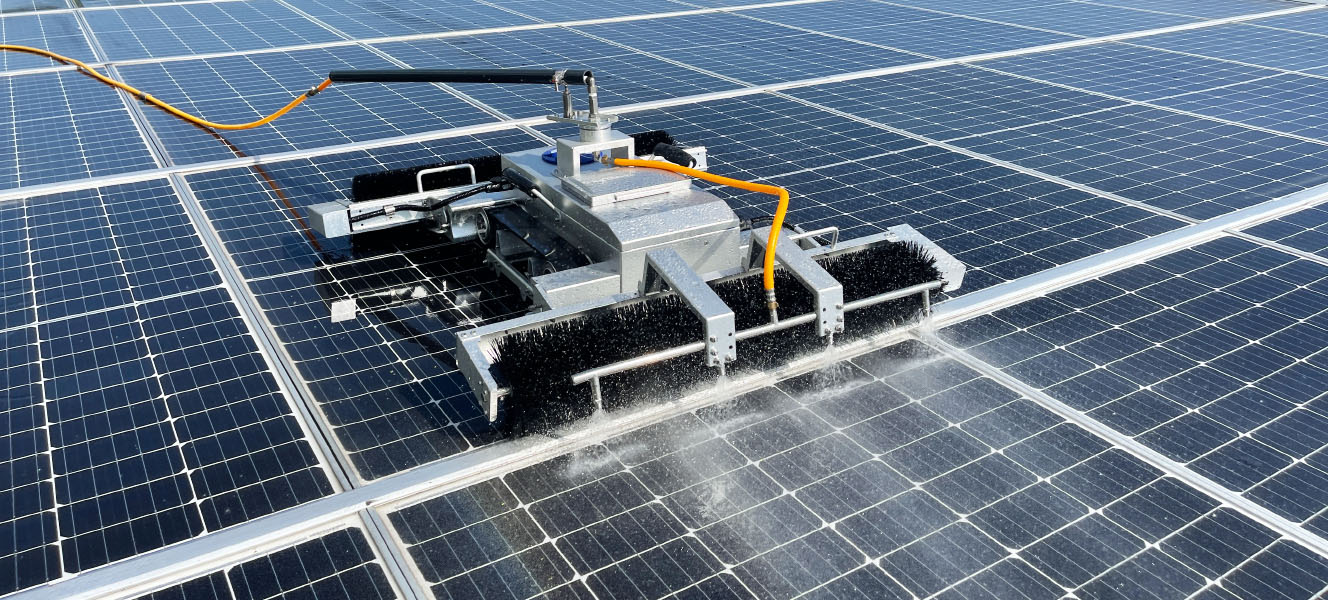
Zhonghui Chuangzhi has adopted magnetic resonance wireless charging technology to solve the problem of insufficient battery life of photovoltaic robots, achieving efficient and stable energy transmission. This scheme mainly consists of two parts: transmitter and receiver. The transmitter is installed in a fixed position, while the receiver is integrated at the bottom of the photovoltaic cleaning robot. When the robot's battery is low, it will autonomously move to the vicinity of the transmitter for charging. The entire charging process does not require manual intervention, greatly improving cleaning efficiency. The advantages of this innovative solution are:
1. Efficient energy transfer: Through magnetic coupling resonance technology, efficient energy transfer has been achieved, effectively reducing charging time.
2. Environmental adaptability: This solution can operate stably in various harsh environments and has strong adaptability.
3. Improving cleaning efficiency: Wireless charging allows robots to be charged at any time and any place, greatly improving cleaning efficiency.
4. Reduce operation and maintenance costs: By adopting wireless charging solutions, the frequency of manual intervention and cable replacement can be reduced, thereby lowering operation and maintenance costs.
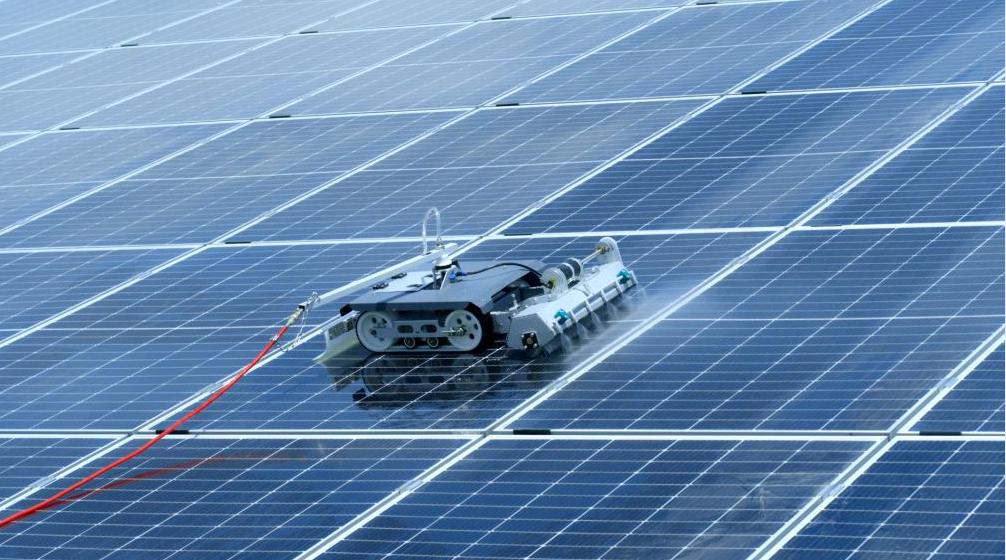
With the continuous development of the new energy industry, the issue of clean photovoltaic panels has received increasing attention. The wireless charging solution for photovoltaic cleaning robots, as an innovative energy supplement method, has broad application prospects and market potential. The wireless charging solution of Zhonghui Chuangzhi Photovoltaic Cleaning Robot has achieved efficient and stable energy transmission, bringing revolutionary changes to the cleaning of photovoltaic panels.