
Analysis of the advantages of wireless charging versus wired charging in terms of safety performance for electric bicycles
Contact method:
Wired charging: During the charging process, the charging cable needs to be inserted into the interface between the electric bike and the charging device, which can easily generate electric sparks and pose a risk of electric shock. Repeatedly plugging and unplugging the plug can easily cause wear and tear on the charging port and plug.
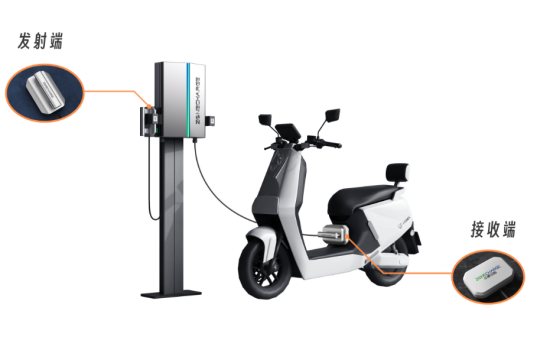
Wireless Power Transfer (WPT) is the use of electromagnetic waves that do not come into contact with wires. When two devices are adjusted to the same frequency or resonate at a specific frequency, they can exchange energy with each other. The energy transmission process does not involve direct contact with current, and charging can begin once the receiving handle and charging station transmitting handle on the electric bike are magnetically paired.
hidden danger:
Wired charging: When plugging and unplugging charging cables, safety hazards such as poor contact, cable damage, and electric shock may occur, especially in harsh weather or improper operation, which may increase the risk of accidents.
Wireless charging: As there is no need to plug or unplug the charging cable during the charging process, it eliminates potential safety hazards such as electric shock or equipment damage caused by loose cables, thereby improving the safety of the charging process.
Waterproof, dustproof, explosion-proof, and anti icing:
Wired charging: Due to the presence of charging plug interfaces, electronic components cannot be completely enclosed, and charging equipment is relatively more susceptible to external environmental factors such as water and dust, which may affect charging efficiency or cause equipment failure.
Wireless charging: Wireless charging technology has the advantage of electrical isolation, enclosed charging circuit, spark free, waterproof, dustproof, explosion-proof, and is not affected by parking environment and weather. It can maintain stable operation in harsh environments and rainy and snowy weather, improving the stability and reliability of charging equipment.

Compatibility adaptation:
Wired charging: The fuzzy matching of wired charging stations leads to direct charging of tens of volts of batteries with 220V power supply. In addition, the types of batteries and charging voltages are not the same. If mismatched chargers are used for charging, it is easy to cause battery fires and explosions.
Wireless charging: Zhonghui Chuangzhi's wireless charging station adopts unique technology to intelligently adapt to various lithium batteries and lead-acid batteries with voltages of 36V-72V, and is highly compatible with over 90% of electric two wheeled vehicles on the market. The electromagnetic intensity output from the power transmission end can intelligently output corresponding currents for different types and voltages of electric bicycle batteries, without the risk of high voltage to low voltage charging or electrical breakdown causing fires. It is also of great significance for the unified charging interface of corresponding national policies.

Multi directional intelligent monitoring:
Wired charging: Only a very small number of installed wired charging interfaces have a background data monitoring system, and the protection function is mainly limited to simple overcurrent and overcharging protection.
Wireless charging:
The new charging device has a complete IOT management system to monitor the real-time status of each charging station. By installing a wireless charging receiver for electric bicycles, rich information about the electric bicycle can be collected, including the manufacturer, date of manufacture, license plate number, owner information, battery parameters, etc. These data can be used to evaluate the service life and charging frequency of batteries. The platform can analyze and identify electric vehicles with safety hazards. The wireless charging system has automatic power-off protection function when fully charged and the function to stop charging expired batteries, ensuring the safety of the charging process and the long-term reliable use of the battery.
Wireless charging technology has significant advantages over wired charging in terms of safety, convenience, and stability. The use of wireless charging can eliminate potential safety hazards caused by plugging and unplugging charging cables, and improve the safety of the charging process; Simultaneously, the operation is more convenient, improving the user experience; And it has functions such as waterproof, dustproof, and anti icing, adapting to various environmental conditions, further enhancing the stability and reliability of charging equipment.